
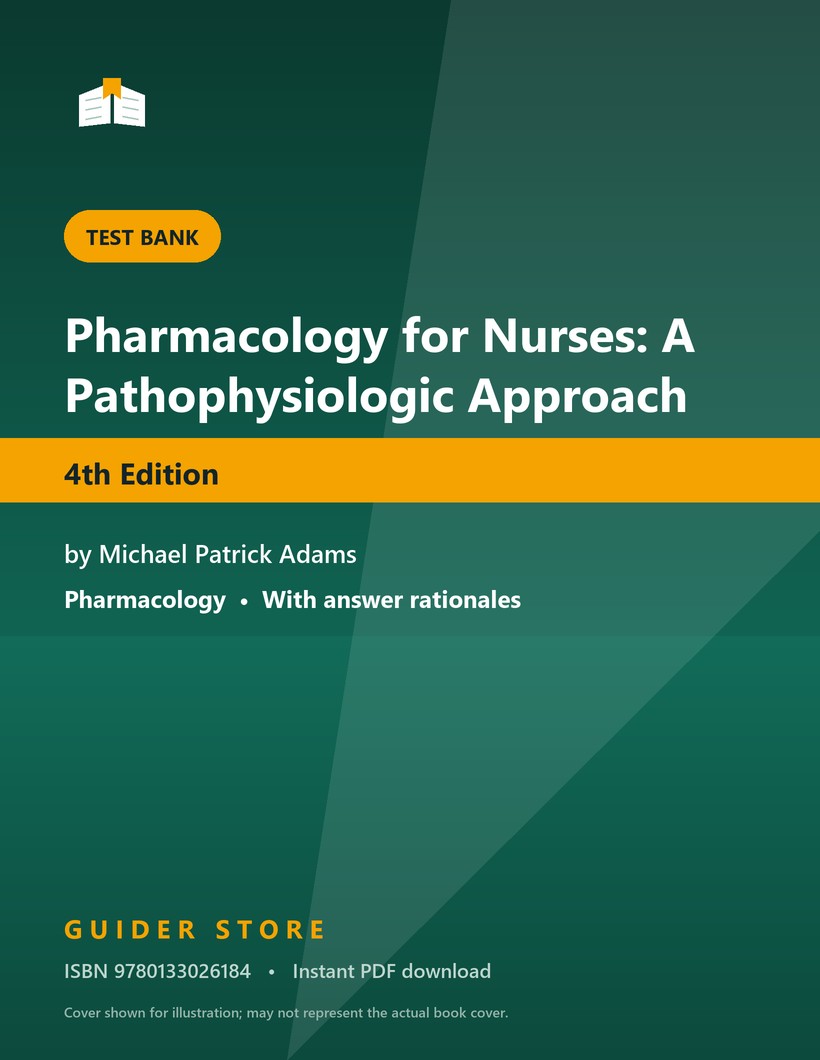

Pharmacology is the course where two hard subjects collide: you have to remember hundreds of drugs and understand the disease processes they treat. Adams’ Pharmacology for Nurses: A Pathophysiologic Approach is built around exactly that link — drugs organised by the body system and disorder they act on, not just by alphabetical drug class. This test bank is matched to the 4th Edition so your self-testing follows the same pathophysiology-first logic, helping you connect a drug’s mechanism to the condition, the expected therapeutic response, and the nursing care that keeps the patient safe.
Why this test bank helps
Rote memorising drug names rarely survives an exam or a clinical shift. Every question here comes with a written rationale that explains why the answer is correct — and just as importantly, why the tempting distractors are wrong. That rationale-first design trains you to reason from mechanism of action to adverse effects to monitoring parameters, which is precisely the thinking NCLEX-style items and pharmacology finals reward.
What’s inside
- Questions mapped to the textbook’s chapters and body-system units, so you can drill one topic at a time.
- Exam-style and NCLEX-style formats: single-best-answer multiple choice, select-all-that-apply, and simple dosage/calculation items where relevant.
- A clear rationale for every question, covering the correct choice and the reasoning behind each incorrect option.
- Items that emphasise nursing implications — assessment, patient teaching, safe administration, and recognising toxicity.
- Instant digital PDF you can search, print, and revisit as you move through each unit.
Topics covered
- Core principles: pharmacokinetics, pharmacodynamics, and the nursing process applied to drug therapy
- Autonomic nervous system agents — adrenergic, cholinergic, and their blockers
- Cardiovascular and renal drugs: antihypertensives, diuretics, antidysrhythmics, drugs for heart failure and lipid disorders
- Drugs affecting coagulation, and agents for blood and immune conditions
- Anti-infectives: antibiotics, antivirals, antifungals, and antineoplastic therapy
- Central nervous system drugs: analgesics, anaesthetics, anxiolytics, antidepressants, and antipsychotics
- Respiratory, gastrointestinal, and endocrine medications, including drugs for diabetes and thyroid disorders
- Pain management, anti-inflammatory agents, and drugs for musculoskeletal and integumentary conditions
Who it’s for
Nursing students working through a semester pharmacology course that uses Adams’ pathophysiologic approach, students revising for course finals, and NCLEX-RN candidates who want focused pharmacology practice with explained answers. It also suits nurses returning to study or bridging into a new specialty who need a structured refresher on drug therapy by body system.
How to use it (the right way)
Study each chapter first, then test yourself on that chapter before moving on. Answer a question, commit to your choice, then read the rationale — especially for anything you got wrong or guessed. Keep a running list of drugs and mechanisms that trip you up and re-test those. Treat this as a self-assessment and study aid to check your understanding, not as a substitute for your textbook, lectures, or clinical practice. Use it honestly and in line with your school’s academic-integrity policy; it will not reflect the exact questions on any graded exam, and no study tool can guarantee a grade.
Sample question
(Shows the format — your download contains the full set.)
Q. A patient with heart failure is prescribed digoxin. Which finding should prompt the nurse to withhold the dose and notify the prescriber?
- A. Apical heart rate of 78 beats per minute
- B. Serum potassium of 2.9 mEq/L
- C. Blood pressure of 118/74 mmHg
- D. Reported relief of ankle swelling
Answer: B. Hypokalaemia (a potassium of 2.9 mEq/L is well below the normal range) increases the myocardium’s sensitivity to digoxin and predisposes the patient to digoxin toxicity and dysrhythmias, so the dose should be held and the low potassium addressed. A is a normal apical rate above the usual hold threshold of 60 beats per minute. C is a normal blood pressure and not a reason to withhold digoxin. D is a desired therapeutic effect showing reduced fluid overload, which supports continuing therapy rather than stopping it.
Edition & format
- Matches: Test Bank for Pharmacology for Nurses: A Pathophysiologic Approach, 4th Edition – Michael Patrick Adams
- ISBN-13: 9780133026184
- Format: Digital PDF, delivered instantly after checkout
- Access: Lifetime — re-download anytime from your account
Please confirm the edition and ISBN match your course before buying — message us and we’ll check.
Frequently asked questions
Is this the textbook or a study aid? This is a test bank of practice questions with answer rationales. It is a self-assessment tool designed to be used alongside your textbook and lectures, not a copy of the book itself.
Are the questions the same as my actual exam? No. These are practice items for study and review. They will not match any specific graded exam, and no study resource can promise a particular score.
Does every question include a rationale? Yes. Each item explains why the correct answer is right and why the other options are wrong, so you learn the reasoning, not just the letter.
How and when do I get my download? It is a digital PDF delivered instantly after checkout, with lifetime access to re-download from your account.
Explore more Pharmacology Test Banks — all with instant PDF delivery and answer rationales.
Other editions of this book: 5th Edition




Reviews
There are no reviews yet.