


Advanced pharmacology is where nurse practitioner students hit their steepest learning curve. It is no longer enough to know a drug’s name and dose — as a prescriber you have to reason through mechanism of action, pharmacokinetics, drug–drug interactions, monitoring parameters, and how a single prescribing decision plays out across renal function, age, pregnancy, and comorbidity. This test bank is matched to Pharmacotherapeutics for Advanced Practice Nurse Prescribers, Fifth Edition, and it turns that dense clinical content into focused, chapter-aligned practice so you can test what you actually understand before an exam does it for you.
Why this test bank helps
The value is not in the questions alone — it is in the rationales. Every item explains why the correct answer is correct and, just as importantly, why the tempting distractors are wrong. That mirrors how prescribing decisions really work: you rule out options based on contraindications, interactions, and patient factors. Reading the rationale after each attempt builds the reasoning pattern you need for both course exams and clinical decision-making.
What’s inside
- Practice questions mapped to the book’s chapters and drug-class sections, so you can study one system or one class at a time
- Board- and NP-exam-style formats: single-best-answer multiple choice, patient-scenario vignettes, and select-all-that-apply items where the content calls for it
- A written rationale for every question, covering the correct choice and the reasoning behind the incorrect ones
- Coverage of prescribing-focused reasoning: dosing considerations, monitoring, adverse effects, and interaction checks
- Delivered as an instant, searchable PDF you can study on any device
Topics covered
- Principles of pharmacokinetics, pharmacodynamics, and pharmacogenomics for prescribers
- Cardiovascular agents — antihypertensives, antiarrhythmics, lipid-lowering therapy, and anticoagulants
- Anti-infective therapy — antibiotics, antivirals, and antifungals with stewardship considerations
- Respiratory, allergy, and asthma/COPD pharmacotherapy
- Endocrine agents including diabetes management and thyroid therapy
- Central nervous system and psychiatric medications — analgesics, antidepressants, and anxiolytics
- Gastrointestinal, genitourinary, and pain-management drug classes
- Prescribing across special populations — pediatric, geriatric, pregnancy, and lactation
- Legal, ethical, and safe-prescribing responsibilities of the advanced practice nurse
Who it’s for
This is built for nurse practitioner and DNP students taking an advanced pharmacology or pharmacotherapeutics course, as well as APRN candidates reviewing drug therapy before certification exams. It is equally useful for practicing NPs, CNSs, and clinical educators who want a structured self-check against a widely used prescribing text.
How to use it (the right way)
Use it as a self-assessment tool, not a shortcut. Read the corresponding chapter first, then attempt a block of questions closed-book. Score yourself, then study every rationale — including the ones you got right by luck. Re-test the classes you missed a few days later to check retention. Academic-integrity note: this is a study and self-assessment aid to deepen your understanding; it is not a copy of any graded exam and should not be used to gain an unfair advantage. Always follow your program’s and licensing body’s policies, and verify prescribing information against current clinical references before caring for real patients.
Sample question
(Shows the format — your download contains the full set.)
Q. A 68-year-old patient with heart failure and reduced ejection fraction is started on lisinopril. Which laboratory parameter is most important to monitor within the first 1–2 weeks after initiation?
- A. Fasting blood glucose
- B. Serum potassium and creatinine
- C. Serum calcium
- D. Prothrombin time (PT/INR)
Answer: B. ACE inhibitors reduce aldosterone, which can cause hyperkalemia, and they can lower glomerular filtration pressure, raising serum creatinine — both warrant early monitoring, especially in older adults with heart failure. Glucose (A) and calcium (C) are not directly affected by ACE inhibition, and PT/INR (D) tracks warfarin therapy, not lisinopril.
Edition & format
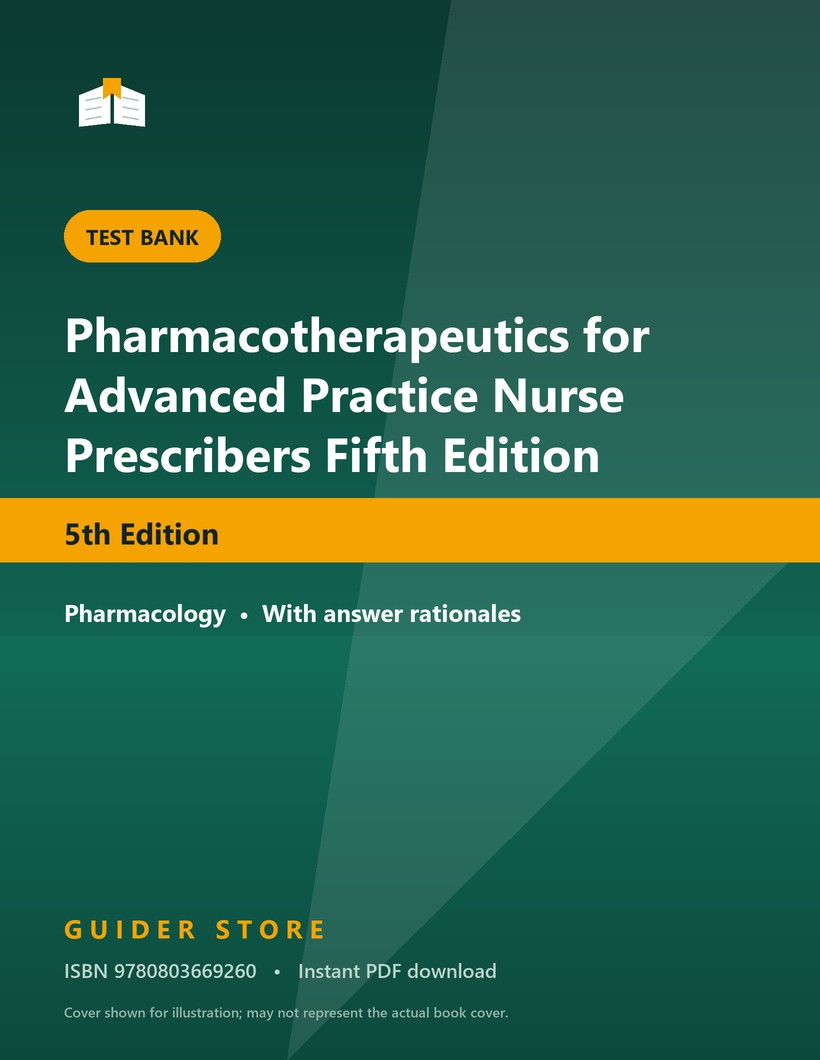
- Matches: Test Bank For Pharmacotherapeutics for Advanced Practice Nurse Prescribers Fifth Edition
- ISBN-13: 9780803669260
- Format: Digital PDF, delivered instantly after checkout
- Access: Lifetime — re-download anytime from your account
Please confirm the edition and ISBN match your course before buying — message us and we’ll check.
Frequently asked questions
Does this include an answer rationale for every question? Yes. Each item comes with an explanation of the correct answer and why the other options are incorrect.
Will this guarantee a better grade? No honest resource can promise a grade. It is a practice and review tool — your results depend on how you study.
Is this the textbook itself? No. This is a test bank of practice questions designed to accompany the Fifth Edition, not the textbook or any lecture materials.
How will I receive it? As a downloadable PDF available immediately after checkout, with lifetime re-download access from your account.
Explore more Pharmacology Test Banks — all with instant PDF delivery and answer rationales.



Reviews
There are no reviews yet.